How to Transfer Your Out-of-State Driver’s License to Mass
Moving to Massachusetts with an out-of-state license can leave you unsure which credential to request, what documents to bring, and how to handle a license you no longer have. The transfer process starts online, but preparation matters: your application creates a personalized checklist, and your visit depends on bringing the right records. Here’s how to plan the transfer and avoid preventable delays.
Start by confirming that a license transfer fits your situation
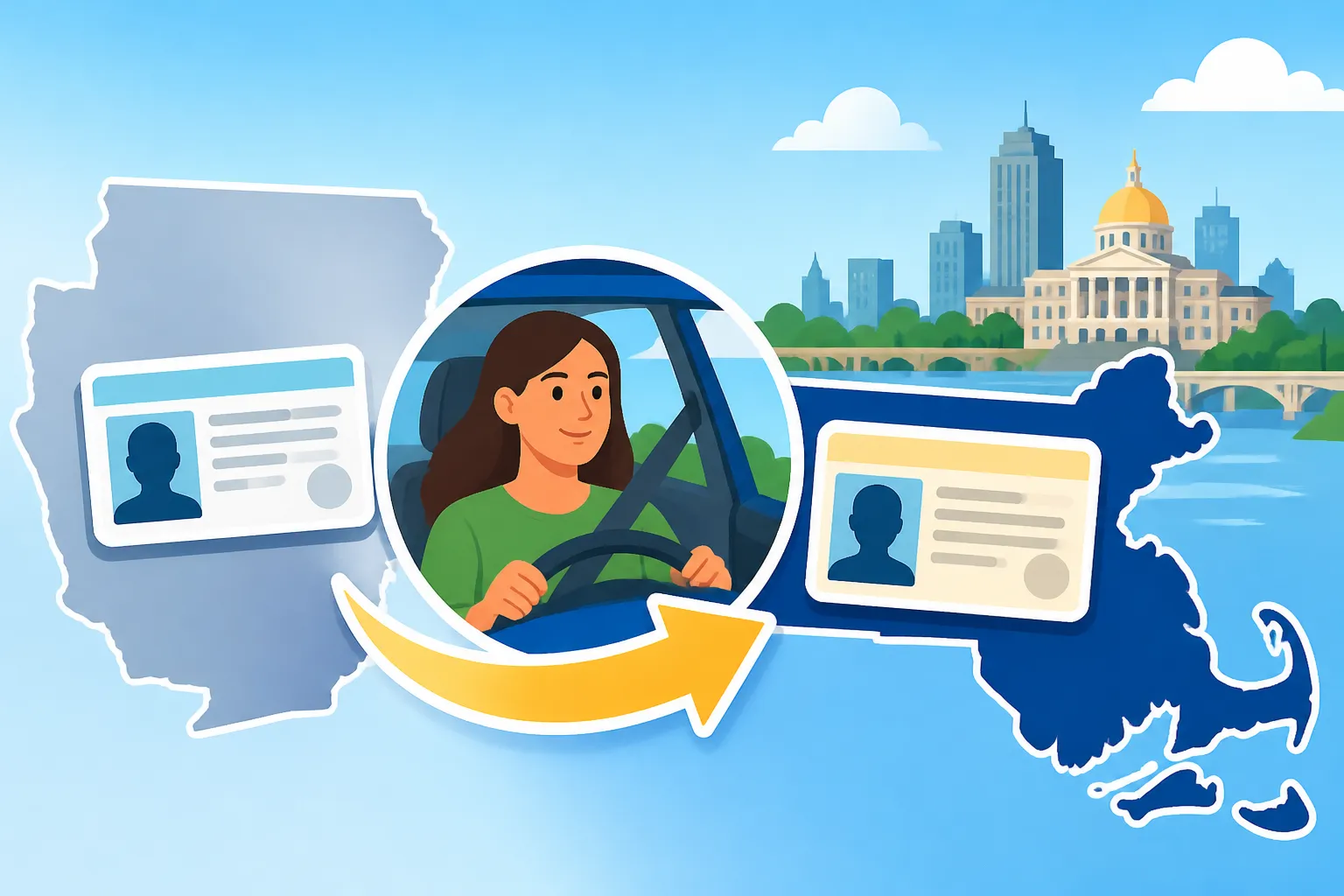
A transfer is for a driver who holds an eligible credential from another state and wants a Massachusetts credential. According to the Massachusetts Registry of Motor Vehicles, eligible drivers can transfer a REAL or standard out-of-state driver’s or motorcycle license to Massachusetts. The RMV determines eligibility, so use its official instructions to confirm that your particular license and circumstances qualify before making plans around a transfer.
A license transfer is different from applying for a first license, renewing a Massachusetts license, or replacing a Massachusetts license that was lost. If you already have a Massachusetts credential, follow the RMV process for that transaction instead. If your out-of-state license is expired, suspended, restricted, or otherwise unusual, do not assume the ordinary transfer instructions answer every question about it. Ask the RMV what applies to your record before you choose an appointment or prepare documents.
Your credential type also matters. The RMV’s transfer process covers driver’s and motorcycle licenses, but a person who holds both kinds of driving privileges should confirm which class or classes the application can address. Do not assume that requesting one credential automatically transfers another privilege. The online application and the RMV’s instructions are the place to check what you can request.
Transfer, rather than start over
If you hold a license from another state, a transfer may be the relevant route, but the word “transfer” does not answer every eligibility question. The RMV can tell you whether your credential and driving history meet the applicable requirements. This is especially important if your card does not clearly show its status, if it has expired, or if you have a record issue that could affect a new credential.
The article Transferring an Out-of-State License to Mass: Are Road Tests Waived? addresses a separate question that many applicants have. Do not infer from the existence of a transfer process that every applicant will have the same testing requirements. Confirm what applies to you with the RMV rather than relying on another person’s experience or assuming a test is automatically waived.
Likewise, a move to Massachusetts may raise questions beyond the license itself. If you are trying to work out when a conversion is appropriate, When Establishing Residency Requires a Mass License Conversion may help you identify the issue to clarify. Treat the RMV’s current instructions as the controlling source for your individual transaction.
Check for complications before you choose a transaction
Take a moment to identify anything that could make your case different from a routine transfer. Examples include not having the physical license, having an expired credential, or having a name or record that does not match across documents. These circumstances do not necessarily mean you cannot proceed, but they can affect which evidence the RMV asks you to provide.
If there is a suspension or other status concern, resolve the question before booking a transfer visit. A transfer appointment is not a substitute for addressing a separate hold or record issue. The RMV can explain which transaction or steps apply to your situation.
Choose whether to request a standard credential or REAL ID
The transfer process asks you to choose between a standard credential and REAL ID. Think about the credential you need and the documents you can provide before completing the application. The two options are not simply different names for the same request, and the supporting document requirements may differ. Review the RMV’s instructions for the option you select.
| Decision point | Standard credential | REAL ID |
|---|---|---|
| Is it available through the transfer process? | The RMV lists a standard out-of-state license as eligible for transfer when the applicant qualifies. | The RMV lists a REAL out-of-state license as eligible for transfer when the applicant qualifies. |
| What should you do first? | Select the standard option in the online application and follow the personalized checklist. | Select REAL ID in the online application and follow the personalized checklist. |
| What documents should you use? | Bring the documents the RMV assigns to your application. | Bring the documents the RMV assigns to your application; review the REAL ID-specific instructions as well. |
| What if you are unsure which to request? | Compare the credential’s uses and requirements before submitting the application. | Compare the credential’s uses and requirements before submitting the application. |
This table is a planning aid, not a substitute for the RMV’s checklist. In particular, do not use a general list of documents found elsewhere as proof that your application is complete. Your checklist is tied to the option and information you submit.
For a plain-language comparison of the credential choices, see Massachusetts REAL ID vs Standard Driver’s License: What Differs. If you decide to request REAL ID, Massachusetts REAL ID Requirements: Complete Document Guide can help you prepare to review the relevant evidence. These articles can help you understand the choice, but the current application checklist is what you should use to assemble your appointment papers.
Decide based on your needs, not just the name on your current card
Having a REAL ID from another state does not, by itself, tell you which Massachusetts option you should request. Review the Massachusetts credential descriptions and decide what you need after the move. A standard card may be the right choice for one person, while another may prefer to request REAL ID. The best choice depends on your intended use and whether you can meet the selected option’s document requirements.
If you are undecided, pause before submitting the application. Changing the selection later could mean repeating part of your preparation or checking with the RMV about how to correct the request. Do not guess based on the appearance of your current license or on what a family member chose. Compare the RMV’s descriptions and use the selection that matches your needs.
The same care applies if you hold a motorcycle license or multiple driving privileges. Read the application options closely and confirm that the request covers the credential you want to transfer. If the interface does not make your situation clear, seek direction from the RMV before committing to a selection.
Complete the online application and use its checklist
The online application is the foundation of the transfer. According to the Massachusetts Registry of Motor Vehicles, choose a standard or REAL ID, complete the online application to get your personalized document checklist, then make an appointment at an RMV Service Center. The checklist is important because it tells you which documents to gather for the information and credential option in your application.
Set aside time to complete the application carefully. Use consistent information and check that your responses match your identity and the records you plan to bring. A mismatch, omission, or mistaken selection can complicate a visit even when you have collected many supporting papers. If you are uncertain how a question applies to you, do not improvise an answer simply to move forward. Use the RMV’s instructions or ask the RMV how to handle the situation.
Read the checklist item by item
After you complete the application, review the personalized checklist from beginning to end. Treat each listed item as a separate task. Identify the document you will use for each requirement, verify that you can bring it in the form the RMV accepts, and set it aside with your application materials.
A checklist may include evidence for different parts of your identity or application. Do not assume that one document will satisfy every item, or that a document accepted for one credential choice will work for another. If the checklist permits a choice among documents, make sure the option you plan to bring matches the RMV’s instructions. For broader preparation, Checklist of Required Documents for a Massachusetts Driver’s License can help you think through the paperwork, but it does not replace the checklist generated by your application.
If a requirement seems unclear, resolve it before your appointment. A document that appears relevant to you may not meet the RMV’s specific requirement, and an incomplete set of records can mean you need to return or rearrange your plans. Verify the document type, any required certification, and whether the RMV expects an original or another acceptable format. Do not alter, summarize, or substitute official records unless the RMV says that the format is acceptable.
Keep a working copy of your plan
Save or print the application and checklist in a way that is easy to retrieve. Make a simple preparation list using the checklist’s own terms. For each requested item, note what you intend to bring and whether you still need to obtain it. This is a practical organization step, not an extra RMV requirement.
Before the visit, compare your papers against the checklist again. This final review can catch a missing page, a document left at home, or a record that does not match the name you used in the application. Keep the out-of-state license with the other appointment materials if you have it. If your license is unavailable, use the alternate-document instructions described below rather than assuming you can proceed with no substitute evidence.
The online application and the appointment are related parts of the process, but completing one does not complete the other. Do not mistake an application confirmation for approval or for a Massachusetts license. Follow the RMV’s instructions through the service-center visit and any later communication.
Gather the documents for your appointment
According to the Massachusetts Registry of Motor Vehicles, bring the completed application, the documents on your checklist, your out-of-state license, and the required fee. The instruction is straightforward, but the details are worth checking: the application should be complete, each checklist item should be accounted for, and your license should be the credential you are transferring.
Do not rely on a broad list of commonly used identity documents to decide what to bring. The application checklist is personalized, and it is the right starting point for your case. If you need help understanding how to prove identity, Proving Identity for a Massachusetts Standard Driver’s License may provide useful context. If you are still figuring out residency evidence, see What Proof of Massachusetts Residency Does the RMV Demand?. Confirm that the documents you select satisfy your own checklist, especially if you chose REAL ID.
Check consistency across your records
Review names and other identifying details across your application and documents. A difference in spelling, a missing middle name, or a name change can create questions at the counter. If your records do not match, find out what supporting evidence the RMV requires before the appointment. Bringing a collection of papers without knowing which one explains the mismatch may not resolve it.
Do not make handwritten corrections to an official record or rely on an informal explanation as a substitute for required evidence. If the application contains a mistake, use the RMV’s instructions for correcting it. If an official document is wrong, ask the issuing authority about correction procedures and check with the RMV about what to bring in the meantime.
Think about document condition and format, too. Follow the checklist and RMV directions for each item. If you are unsure whether a copy, digital display, translation, or other version is acceptable, confirm before the visit. The safest approach is not to assume that a document will be accepted merely because it contains the information the RMV needs.
Plan for the required fee without guessing its amount
The RMV instructs applicants to bring the required fee. The amount and accepted payment methods can depend on the transaction and current rules, so check the official RMV information before your appointment. Do not rely on an old receipt, a friend’s estimate, or a third-party description for current figures.
Check the payment instructions for your transaction and decide how you will pay before leaving. If you need a particular payment method, confirm that the RMV accepts it for the service you are requesting. A payment issue can disrupt an otherwise well-prepared visit, and the fee should be treated as part of the appointment checklist rather than an afterthought.
Book and prepare for the RMV Service Center visit
After you have completed the online application and reviewed the checklist, make an appointment at an RMV Service Center, as directed by the Massachusetts Registry of Motor Vehicles. The RMV’s instructions make the order useful: complete the application first so you have the personalized document checklist, then book the visit with a clear understanding of what to bring.
For more appointment preparation, see Booking an RMV Appointment to Transfer an Out-of-State License. Use the official RMV system to make the appointment and review its confirmation and instructions. This site is an independent guide; applicants complete the application, make appointments, and pay fees through the official agency.
Before you leave
Use the RMV checklist as your final packing list. Bring the completed application, every document on the personalized checklist, the out-of-state license if you have it, and the required fee. Keep the items together so that you can find them easily when asked. If any requirement is unclear, seek clarification before traveling to the service center.
Check the appointment details and the RMV’s current visit instructions before setting out. Do not assume that an appointment at one location, a walk-in visit, or a particular service option will be available unless the RMV confirms it. To find a nearby office and current hours, use the official agency’s office locator.
Build practical flexibility into your plans. Even with complete documents, you should be ready to follow directions from RMV staff if your application needs review or if the transaction cannot be completed as expected. Avoid scheduling other commitments so tightly that a clarification or additional step would leave you unable to respond.
At the service center
Be ready to explain the transaction you are requesting and present the documents associated with your application. Answer questions accurately. If staff identify a missing or inconsistent item, ask what specific evidence or action is needed, and whether you should correct the application, obtain another document, or make a new appointment.
Do not treat a visit as a guarantee that the transfer will be approved. The RMV reviews the application and supporting evidence. If the outcome depends on additional information, get clear instructions about what remains outstanding and how to continue through the official process.
Keep any paperwork or confirmation you receive. If you need to follow up, those records can help you describe what happened and what the RMV asked you to provide. Do not assume that a document left at the counter or a verbal explanation means the transfer is complete; follow the RMV’s stated next steps.
If you do not have your out-of-state license
Not having the physical license does not mean you should simply arrive with nothing in its place. According to the Massachusetts Registry of Motor Vehicles, if you don’t have your license, bring acceptable photo ID and a certified driving record no more than 30 days old. The record must meet the RMV’s certification and age requirements; verify that the record you obtain fits those instructions before your appointment.
This alternative is especially important if your card was lost, stolen, damaged, or retained elsewhere. The RMV’s instructions call for both acceptable photo ID and a certified driving record when the out-of-state license is unavailable. Do not assume that a photocopy, an image on a phone, an informal driving-history printout, or a record older than the stated limit is an acceptable substitute.
For additional context about a missing credential, read How to Transfer a Lost Out-of-State License to Massachusetts. That article can help you think through the issue, but check the RMV’s current instructions for your case and make sure you obtain the required records in an acceptable form.
Obtain the record early enough to check it
A certified driving record may take time to request or receive, depending on the issuing state and its process. Plan ahead so you can review it before the appointment and correct any problem with the issuing authority if needed. The RMV’s stated requirement is that the record be no more than 30 days old, so take its date into account when arranging the appointment and obtaining the record.
Check that the record is certified in the way the RMV requires and that it identifies you clearly. If the name or other details differ from your Massachusetts application, do not assume the record will be accepted without explanation. Ask the RMV what additional evidence is needed and whether the discrepancy should be addressed before the visit.
If the issuing state offers different kinds of driving records, confirm which one is certified and appropriate for the RMV’s purpose. A summary or unofficial status page may not meet the requirement. When in doubt, ask the issuing authority what it provides as a certified record and verify the acceptable form with the Massachusetts RMV.
If the record raises a separate concern
A driving record can reveal a question that is not solved by providing the record itself, such as a suspension or a status that differs from what you expected. If that happens, contact the RMV for direction before assuming the transfer can proceed normally. A missing card and a problem in the driving record are separate issues; having the required substitute documents does not necessarily resolve an underlying eligibility question.
If a suspension or other out-of-state issue may affect your application, Out-of-State OUI or Suspension: Does It Block Your Mass License? may help you identify what to ask. The RMV can explain how your specific record affects the transaction and whether you need to complete another step before pursuing the transfer.
Avoid common transfer delays and follow through afterward
Many preventable problems begin before the appointment: choosing a credential without reviewing its document rules, completing an application with inconsistent details, or treating a general document list as if it were the personalized checklist. A careful review cannot guarantee approval, but it can reduce avoidable confusion and help you arrive prepared.
Use this sequence to keep the process organized:
- Confirm that you are pursuing a transfer for an eligible out-of-state driver’s or motorcycle license.
- Decide whether you want a standard credential or REAL ID and review the RMV’s instructions for that option.
- Complete the online application and obtain its personalized document checklist.
- Gather the completed application, every document on the checklist, your out-of-state license if available, and the required fee.
- If you do not have the license, obtain acceptable photo ID and a certified driving record that meets the RMV’s stated age requirement.
- Make an appointment at an RMV Service Center and review the appointment instructions.
- Attend the visit and follow the RMV’s directions if it requests clarification or further evidence.
The sequence reflects the RMV’s stated process, but it does not decide eligibility for you. If your case includes an unusual record, missing information, or a document mismatch, clarify it with the RMV before relying on the ordinary path.
Watch for assumptions that can derail a visit
Do not assume that a transfer automatically preserves every privilege or class shown on an out-of-state credential. Confirm what the Massachusetts credential will cover. If you hold a motorcycle license, check that the application includes the motorcycle request you intend to make.
Do not assume the RMV will accept a document simply because another agency accepted it. Each checklist item must be met under the RMV’s instructions. Likewise, do not assume that a REAL ID from another state means your Massachusetts REAL ID application needs no additional evidence. Follow the checklist for the Massachusetts application you completed.
Do not wait until the appointment to discover that your license is missing or that you need a certified record. The RMV provides an alternate document path for applicants without the license, but you need to prepare that evidence in advance. If you notice the problem after booking, review the RMV instructions and ask whether you should keep or change the appointment.
Finally, do not rely on an old description of fees, accepted payment methods, appointment options, or documents. These details can change. Check the official RMV information close to your visit, and use its office locator for current location and hours.
Keep track of what happens after the visit
When the RMV completes or reviews your transaction, follow the directions it gives you. If you receive a temporary document, a receipt, or instructions to provide more information, read them carefully and keep them with your records. Do not assume that the physical card has arrived or that every part of the transfer is complete until the RMV confirms the status.
If you have questions about what happens to the license from your former state, check directly with the RMV rather than guessing. Does the RMV Invalidate Your Out-of-State License After a Transfer? covers that concern. The rules and handling can depend on the transaction, so use the official agency’s answer for your situation.
If the RMV cannot complete the transfer during the appointment, ask what remains to be done and how to continue. Make a note of the requested document or correction, any instructions on rescheduling, and any confirmation you receive. When you are ready to return, compare your updated paperwork against the RMV’s directions rather than rebuilding the file from memory.
Frequently Asked Questions
Can I transfer an out-of-state REAL ID to Massachusetts?
The Massachusetts Registry of Motor Vehicles lists a REAL out-of-state driver’s or motorcycle license as eligible for transfer for qualifying drivers. Choose the Massachusetts credential you want, complete the online application, and follow the personalized checklist.
What should I bring to the appointment?
According to the Massachusetts Registry of Motor Vehicles, bring the completed application, the documents on your checklist, your out-of-state license, and the required fee. If you do not have the license, the RMV instructs you to bring acceptable photo ID and a certified driving record no more than 30 days old.
Can I use a general document list instead of the online checklist?
Use the personalized checklist created by your online application. General document guidance may be useful for preparation, but it does not replace the RMV’s instructions for your application and credential choice.
Should I make an appointment before completing the application?
The Massachusetts Registry of Motor Vehicles directs applicants to choose a standard or REAL ID, complete the online application to get a personalized document checklist, and then make an appointment at an RMV Service Center. Following that order helps you prepare the documents needed for your visit.
Sources
- Massachusetts Registry of Motor Vehicles — Passenger Class D Drivers Licenses (checked November 11, 2026)
- Massachusetts Registry of Motor Vehicles — Transfer your REAL or standard out-of-state driver's or motorcycle license to Massachusetts (checked November 11, 2026)
Disclaimer
This article is for general informational purposes only and does not constitute professional advice. Laws, prices and regulations vary by location and change over time. Consult a qualified professional for guidance on your specific situation. Massachusetts Driver Guide is not a government agency and is not affiliated with any state motor vehicle department.